Carrying physical 35mm film cameras on international journeys creates compounding travel friction, from high-radiation airport computed tomography scanners fogging unexposed canisters to the physical burden of mechanical brass bodies. Simulating analog emulsions directly through offline mobile pipelines eliminates checkpoint hazards while preserving optical characteristics like grain structure, color grading, and lens aberration. Here is how to configure an offline analog photography workflow to document full travel itineraries without cellular data roaming or fragile chemical rolls.
Airport Security and the Physics of Emulsion Fogging
Modern airport security lanes have largely retired legacy low-dose cabinet X-ray units in favor of high-output Computed Tomography (CT) scanners, such as the Smiths Detection HI-SCAN 6040 CTiX and Analogic ConneCT checkpoints. These scanners mount rotating gantry X-ray tubes that sweep hundreds of collimated fan beams through carry-on luggage to assemble dense three-dimensional volumetric density models. While older flatbed security scanners emitted modest, broad-beam radiation that typical color negative films below ISO 800 could withstand for several passes, a single transit through a modern CT scanner delivers an accumulated radiation dose capable of penetrating lead-lined film bags. The physical result on silver halide emulsions is irreversible base fogging: shadow areas turn muddy gray, dynamic range contracts by several stops, and distinct wavy or sinusoidal density bands imprint directly across the latent image layer.
Travelers attempting to shield physical film rolls often pack lead-lined bags like the Domke Film Shield. In practice, modern checkpoint algorithms automatically flag opaque blocks on the scanner monitor, prompting immediate physical luggage inspections where security agents frequently refuse manual hand-check requests for unexposed film. Beyond checkpoint radiation, physical film rolls suffer from environmental decay during transit. Storing exposed color negative emulsions in tropical humidity above 30 degrees Celsius or in unconditioned luggage holds triggers premature dye-coupler breakdown, creating permanent color shifts toward green or magenta that chemical lab processing cannot balance out. Relying on an on-device digital simulation completely bypasses checkpoint scanning equipment and environmental emulsion decay while keeping your baggage weight light.
Matching Film Emulation Profiles to Travel Lighting Environments
Travel lighting conditions swing across broad exposure values over the course of a single day. Midday coastal streets in southern Europe or Southeast Asia register at Exposure Value (EV) 15 to 16 under intense sunlight, demanding careful highlight containment on bleached stone facades and reflective water surfaces. Emulating daylight-balanced color negative stocks like Kodak Portra 400 or Fujicolor Pro 400H provides wide exposure latitude through a gentle highlight shoulder rolloff, preventing the abrupt digital clipping characteristic of standard mobile phone cameras. The soft tonal curve of these emulsions preserves subtle surface texture on sunlit architectural stucco while keeping shadow detail legible within narrow covered colonnades and shaded market stalls.
Late afternoon golden hour transitions toward lower color temperatures between 3000K and 4500K, where warm amber rendering and subtle edge halation recreate the anti-halation undercoat diffusion of classic color films. In contrast, overcast alpine trails, coastal fog, and rainforest hikes benefit from the punchy response of reversal stocks like Fujichrome Velvia 50 or Provia 100F. Slide films feature a steep characteristic curve with roughly five stops of usable latitude, producing intense tonal contrast, deep emerald foliage, and rich cobalt skies. For night markets, historic alleyways, and subterranean train platforms operating below EV 7, high-contrast monochrome emulsions like Kodak Tri-X 400 or Ilford HP5 Plus pushed to ISO 1600 create graphic, punchy frames where organic grain blends naturally with low-light sensor output.
| Travel Environment | Exposure Value (EV) | Recommended Profile | Optical Characteristics |
|---|---|---|---|
| Midday Sun & Coastlines | EV 15 – 16 | Kodak Portra 400 | Soft highlight rolloff, pastel skies, warm skin tones |
| Alpine Hikes & Overcast Skies | EV 12 – 13 | Fujichrome Velvia 50 | Steep contrast, saturated greens, intense cyan sky bias |
| Golden Hour & Sunsets | EV 10 – 11 | Kodak Ektar 100 | High saturation, amber warmth, smooth shadow gradients |
| Night Transit & Street Markets | EV 5 – 7 | Ilford HP5 Plus (Push 1600) | Coarse grain matrix, deep blacks, high tonal punch |
The On-Device Processing Pipeline and Zero-Data Operation
International transit exposes travelers to unpredictable mobile reception, costly foreign data roaming fees, and remote transit zones completely cut off from network signals. Many mainstream photography and editing applications offload their filter computation, cloud presets, and user authentication to remote servers, causing camera interfaces to freeze, stutter, or fail entirely during high-altitude flights, subterranean subway commutes, or rural border crossings. An offline photographic architecture resolves this failure point by executing every phase of capture and image processing locally on device silicon, declaring zero internet permissions in the application manifest. This design guarantees constant camera readiness without background data syncs draining precious battery life during long travel days.
The underlying software pipeline operates across two decoupled execution stages. In the live viewfinder, a custom GLSL fragment shader runs directly on the mobile GPU, rendering optical simulations including geometric barrel distortion, lateral chromatic aberration along contrasting edges, lens vignette falloff, and color matrix color grading at 60 frames per second. When the shutter button is tapped, the raw sensor frame bypasses main interface logic and passes directly into an isolated background Dart isolate via a compute worker. This worker isolate executes the deterministic baking routine, compositing scanned 35mm film grain plates, authentic dust specks, and analog date stamps onto the frame before writing the finished high-resolution JPEG directly into sandboxed local storage. Because the user interface isolate never waits on JPEG compression or image filter passes, you can shoot rapid documentary sequences without frame drops or viewfinder lag.
Composition Discipline and Fixed-Focal Field Perspectives
Standard mobile camera interfaces promote passive, unfocused documentation: multi-camera arrays tempt travelers to pinch-and-zoom between 13mm ultra-wide and telephoto periscope lenses, while unmetered digital storage encourages burst shooting that generates thousands of near-identical, uncurated snapshots. Historically, analog rangefinder photography cultivated visual discipline through physical constraints. Classic travel reportage cameras such as the Leica M4, Olympus 35 RC, and Canon Canonet QL17 G-III paired fixed 35mm or 40mm prime optics with bright mechanical rangefinder windows. These focal lengths correspond closely to natural human visual attention, providing sufficient environmental scope to anchor historical landmarks within their everyday urban setting without the distorted perspective warping typical of ultra-wide smartphone lenses.
Adopting a fixed focal field perspective during travel shifts your creative approach from passive digital consumption to active physical composition. Instead of zooming electronically and degrading sensor resolution, you move your body through the physical environment to balance foreground and background elements. Composing through a simulated optical rangefinder viewfinder trains your eye to seek clean geometric relationships: a shadowed archway framing a sunlit plaza, a passing tram cutting across wet cobblestones, or directional afternoon light illuminating a café terrace. Restricting your capture tool to a fixed field of view establishes consistent spatial proportions across your entire image archive. By eliminating multi-lens indecision and treating each frame as a deliberate capture, your travel diary develops a cohesive visual voice that genuinely reflects the physical geography of your trip.
Configuring Golden Hour and Night Transit Presets
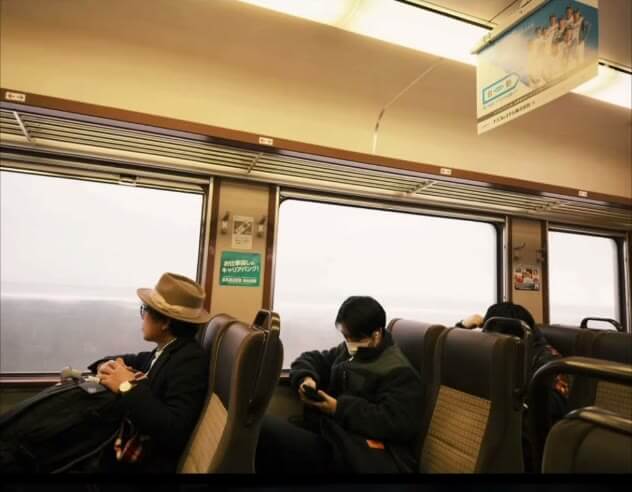
Documenting transit hubs and late-afternoon journeys requires customized capture presets that balance challenging optical dynamics. During golden hour rail trips, low-angled sunlight penetrates carriage windows, scattering light across interior double glazing and airborne dust particles. Setting camera white balance to a fixed 5800K retains a rich amber glow across outdoor scenery while preventing automatic smartphone algorithms from neutralizing sunset warmth. Dialing in a negative exposure compensation of -0.7 EV protects highlights on burnished metal train exteriors and shimmering bodies of water from unrecoverable digital clipping. Introducing a modest 22 percent radial vignette darkens peripheral edge luminance, mimicking the optical falloff of vintage 35mm pancake primes and drawing the viewer's focus toward central passengers or the receding track line.
Night transit across train stations, ferry terminals, and bus depots presents mixed artificial illumination ranging from 2200K low-pressure sodium vapor lamps to 4200K fluorescent tubes. Emulating pushed monochrome emulsions yields clean, expressive captures under these harsh, mixed light conditions. Pushing the sensitivity profile to an equivalent ISO 1600 or 3200 generates coarse, organic silver halide grain clusters that absorb low-light sensor noise, transforming digital chromatic blotches into pleasing physical texture. Deep contrast curves suppress muddy mid-tone color casts from dirty depot lighting, turning harsh neon signage into sharp, graphic focal points. Enabling an authentic orange seven-segment LED date stamp in the lower frame corner provides permanent chronological documentation for train departures, ferry arrivals, and night market walks throughout your travel journal.