The Mathematics of Bellows Extension Light Falloff
When focusing on distant objects at infinity, the distance between the rear optical nodal point of a lens and the film plane equals the lens's nominal focal length (f). In macro photography, achieving life-size 1:1 magnification requires moving the entire lens assembly forward by an additional focal length, doubling the total distance between glass and film. Under the inverse-square law, doubling the distance quartered the illuminance reaching the emulsion, causing an unavoidable 2-stop loss of light.
This geometric loss is formalized by the effective aperture equation: f_effective = f_nominal × (1 + magnification). At 1:1 magnification (m = 1), a lens physically set to f/4 operates with the light-gathering throughput of f/8. In mechanical film photography, failure to calculate and manually compensate for this extension factor will inevitably ruin the roll through severe underexposure.

Managing Sub-Millimeter Depth of Field
At 1:1 reproduction ratios, depth of field shrinks to microscopic fractions of a millimeter. Even when stopping down to small apertures like f/16 to claw back sharpness, optical diffraction begins to soften edge acutance as light waves bend around the edges of the tiny aperture blades. The macro photographer must therefore accept that only a single paper-thin slice of the subject will achieve critical sharpness.
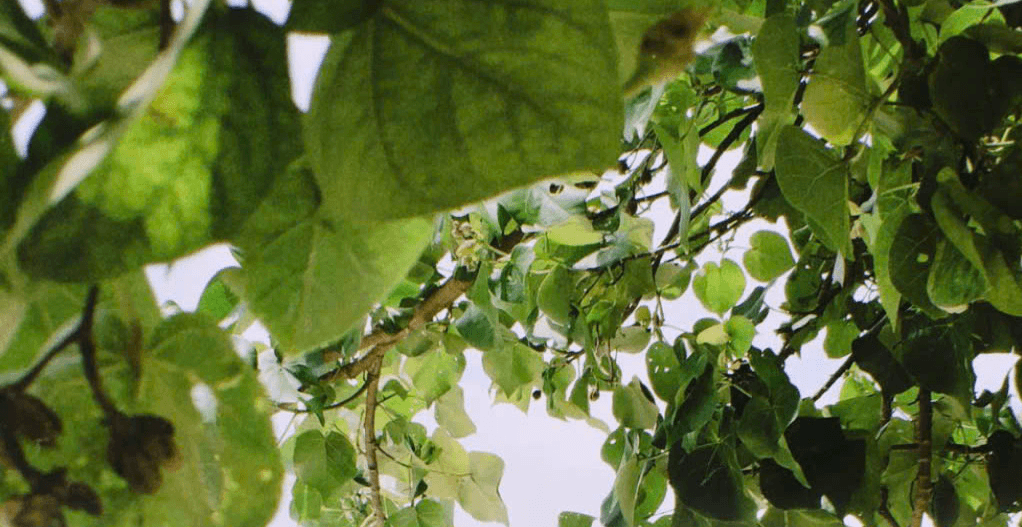
This optical constraint elevates bokeh from an incidental background blur into a primary compositional protagonist. Out-of-focus highlights from specular water reflections transform into luminous circular discs whose perimeter softness is dictated by the lens's spherical aberration correction, bathing macro subjects in an ethereal, painterly glow.
Micro-Precision Experience in RfCamera
RfCamera's macro simulation incorporates optical falloff calculations in its real-time viewport renderer. As you push close to subjects, the fragment shader computes the virtual lens displacement, ensuring that highlight compression and micro-grain visibility respond authentically to focal distance.
By pairing this visual accuracy with localized haptic ticks when subjects align with the central focal plane, RfCamera gives mobile creators the surgical precision of a studio macro rail without the encumbrance of physical extension tubes.