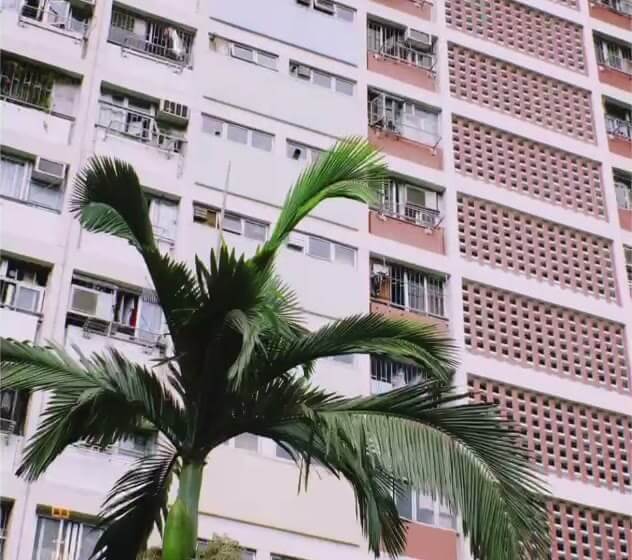
Fuji Superia 400 built its cult following on a chemical quirk: while Kodak emulsions bias skin tones toward warm amber, Fujifilm engineered a fourth color layer that pushes shaded midtones into cool emerald. Rating this consumer emulsion at ISO 320 unlocks the breezy, cyan-tinted aesthetic favored across Japanese street and editorial photography without blowing out highlights.
The 4th Color Layer and Cyan Spectral Sensitivity
In 1989, Fujifilm engineers introduced an emulsion technology that separated consumer Superia and professional Reala from every competing color negative stock on the market: the patented fourth color-sensitive layer. Traditional 35mm color negative films rely on three primary emulsion packs sensitive respectively to blue, green, and red wavelengths. Under daylight illumination balanced at 5500K, this three-layer structure reproduces natural tones accurately. However, standard fluorescent indoor lighting and mixed urban illumination emit an intense spectral spike around 546 nanometers, originating from the mercury vapor discharge inside discharge tubes. On conventional film stocks like Kodak Gold or ColorPlus, this spike overwhelms the green-sensitive layer, producing an unappealing, sickly yellow-green cast across the entire frame, especially across human skin tones.
Fujifilm solved this problem by coating an auxiliary cyan-sensitive layer between the green and red emulsion packs. This fourth layer acts as an autonomous spectral monitor. When it detects high energy concentrations in the 546 nanometer band, it releases development inhibitors that migrate into the adjacent green-sensitive layer during chemical processing, suppressing excess green dye formation. The engineering goal was utilitarian: allowing amateur photographers to shoot under office lighting without mounting corrective magenta CC30 filters. Yet this chemical balance yielded an iconic aesthetic signature in natural daylight. In deep shadows and low-contrast regions where exposure falls below the activation threshold of the fourth layer's inhibitory mechanism, the dye-forming couplers release a subtle excess of cyan and emerald dyes. The resulting shadows drift into cool, watery greens rather than neutral slate gray or murky brown.
Overexposure Latitude and Shadow Density Calibration
Achieving the airy aesthetic common in Japanese photo books requires deliberate deviation from the nominal box speed. Superia 400 features a steep Hurter & Driffield characteristic curve in the shadow toe, followed by exceptional highlight latitude capable of absorbing up to three full stops of overexposure without blocking up dense highlights. If you expose Superia 400 at its rated box speed of ISO 400 under overcast conditions (EV 11 to EV 12), underexposed shadow areas register in the thin, toe region of the negative. Thin negative shadows suffer from coarse silver halide grain clusters and scanning sensor noise, converting what should be delicate pastel emerald into dirty, speckled olive mud.
To maintain luminous shadow values, calibrate your manual camera meter or set your exposure compensation dial to ISO 320 or ISO 250. This deliberate one-third to two-thirds stop overexposure pushes the darkest scene elements out of the non-linear toe and into the linear portion of the film curve. A denser negative allows dedicated film scanners—especially the classic Fuji Frontier SP-3000 or Noritsu HS-1800—to read clean optical density with high signal-to-noise ratios. On the Frontier SP-3000 scanner, scanning overexposed Superia negatives through the standard color balance profile automatically pulls down the global density, lifting shadows into soft, milky greens while preserving highlight texture on white linens and pale sky. Highlights remain completely safe because the thick gelatin emulsion retains highlight detail up to EV 16 without blocking. The resulting scans display creamy skin tones, gentle highlight roll-off, and clear, transparent mint tones in shaded stairwells, alleyways, and foliage.
Coupler Dye Mechanics versus Silicon Sensor Arrays
The emerald shadow rendering of Superia 400 represents a photochemical process fundamentally different from digital sensor color science. Digital CMOS sensors capture incoming photons through a fixed Bayer filter array consisting of alternating red, green, and blue micro-filters. A digital pixel responds linearly to photon count: half the light produces exactly half the voltage. To map this linear data into pleasing imagery, digital image processors apply mathematical tone curves and color matrices that often preserve color tint uniformly across all exposure zones, resulting in sterile or artificially tinted darks.
Superia 400 relies on chromogenic C-41 development chemistry. Suspended within microscopic gelatin layers are silver halide crystals coupled with chemical dye formers: yellow, magenta, and cyan. During development in CD-4 solution at 37.8 degrees Celsius, oxidized developer molecules cross-react with these couplers to form microscopic dye clouds around exposed silver crystals before the silver itself is bleached out. In Superia 400, the magenta-forming couplers in the fast emulsion sub-layer possess a higher threshold activation energy than the cyan couplers. In low-light shadow zones, magenta dye generation drops off more sharply than cyan dye generation. This color crossover effect—where color balance shifts as an intrinsic function of exposure density—produces the physical color shift unique to analog film. The inter-image effects from development-inhibitor-releasing (DIR) couplers further attenuate magenta dye production in adjacent areas. Human vision perceives this relative deficiency of magenta in dark tones as a tranquil, refreshing mint-green cast.
Recreating Superia Physics in GLSL Shaders and Compute Isolates
Translating this delicate photochemical behavior to mobile devices requires moving beyond simple look-up tables (LUTs). One-dimensional or three-dimensional LUTs compress color values into static interpolation grids, often producing visible banding in dark gradients and failing to replicate the dynamic response of dye crossover across variable lighting conditions. In RfCamera, the Superia color profile runs directly on the mobile GPU through a customized GLSL fragment shader (`shaders/film.frag`). The shader calculates per-pixel luminance in linear color space and applies a continuous rational polynomial function that mimics the differential toe roll-off of Superia's magenta and cyan dye couplers. Shadows receive the calculated emerald offset while highlights above 70% luminance remain anchored to neutral daylight white.
This optical simulation operates continuously in the real-time preview viewfinder via `widgets/film_view.dart`, letting you evaluate color harmonies at sixty frames per second before triggering the shutter. When you capture an image, the heavy processing work shifts to `core/bake.dart`, which launches a background Dart `compute()` isolate. Running the baking pipeline in a separate isolate prevents frame drops on the main UI thread while replaying the full optical chain: applying the Superia color matrix, procedural dye cloud grain generated from real scanned 35mm film plates, subtle barrel distortion, and edge chromatic aberration. Furthermore, RfCamera operates completely offline without network permissions, saving the processed high-resolution JPEG directly into your application documents directory with zero background cloud telemetry.
Compositional Strategies for Negative Space and Japanese Palette
A technical film recipe only yields the serene Japanese aesthetic when paired with intentional composition and lighting choices. The style popularized by photographers like Takashi Homma in Tokyo Suburbia or Rinko Kawauchi in Utatane relies on low-contrast, diffused ambient light. Harsh midday sunlight with an exposure value of EV 15 creates intense specular highlights and pitch-black shadows that crush the subtle color separation of Superia 400. Seek out diffused lighting scenarios: thin high overcast, sea fog, pale morning shade beneath concrete awnings, or indirect north-facing window light. In these environments, the total scene dynamic range spans only four to five stops, fitting squarely inside the linear section of the film curve.
Frame your subjects with generous negative space, allocating 40% to 60% of the composition to pale, neutral surfaces. Concrete walls, weathered asphalt, pale tatami mats, linen curtains, and washed-out painted wood act as passive canvases for Superia's color crossover. When the film renders these pale midtones with a gentle cool-green bias while retaining warm highlights on timber or skin, the image achieves visual breathing room. Keep exposure deliberate: meter for the darker midtones, allow natural highlights to float near pure white without fear of clipping, and let the cool emerald shadows establish the mood of quiet, everyday contemplation. Pair this with standard focal lengths like 35mm or 50mm at f/2.8 to isolate subjects gently against soft backgrounds without losing environmental context.