Photochemistry of Iron Salts and Solar UV Reduction
Invented by Sir John Herschel in 1842, cyanotype is the preeminent non-silver photographic process. The photosensitive emulsion is synthesized by dissolving two benign iron compounds in water: ferric ammonium citrate (a light-sensitive organic iron salt) and potassium ferricyanide. When coated onto absorbent paper and dried in the dark, the paper appears a dull chartreuse-green.
Upon exposure to natural solar ultraviolet radiation (UV-A wavelengths between 315 and 400 nm), the ferric ions (Fe3+) in the citrate complex absorb photon energy and undergo reduction to ferrous ions (Fe2+). These newly liberated ferrous ions immediately react with the potassium ferricyanide in the emulsion, synthesizing insoluble ferric ferrocyanide — the historic inorganic pigment known universally as Prussian Blue.
Cold Water Processing and Archival Permanence
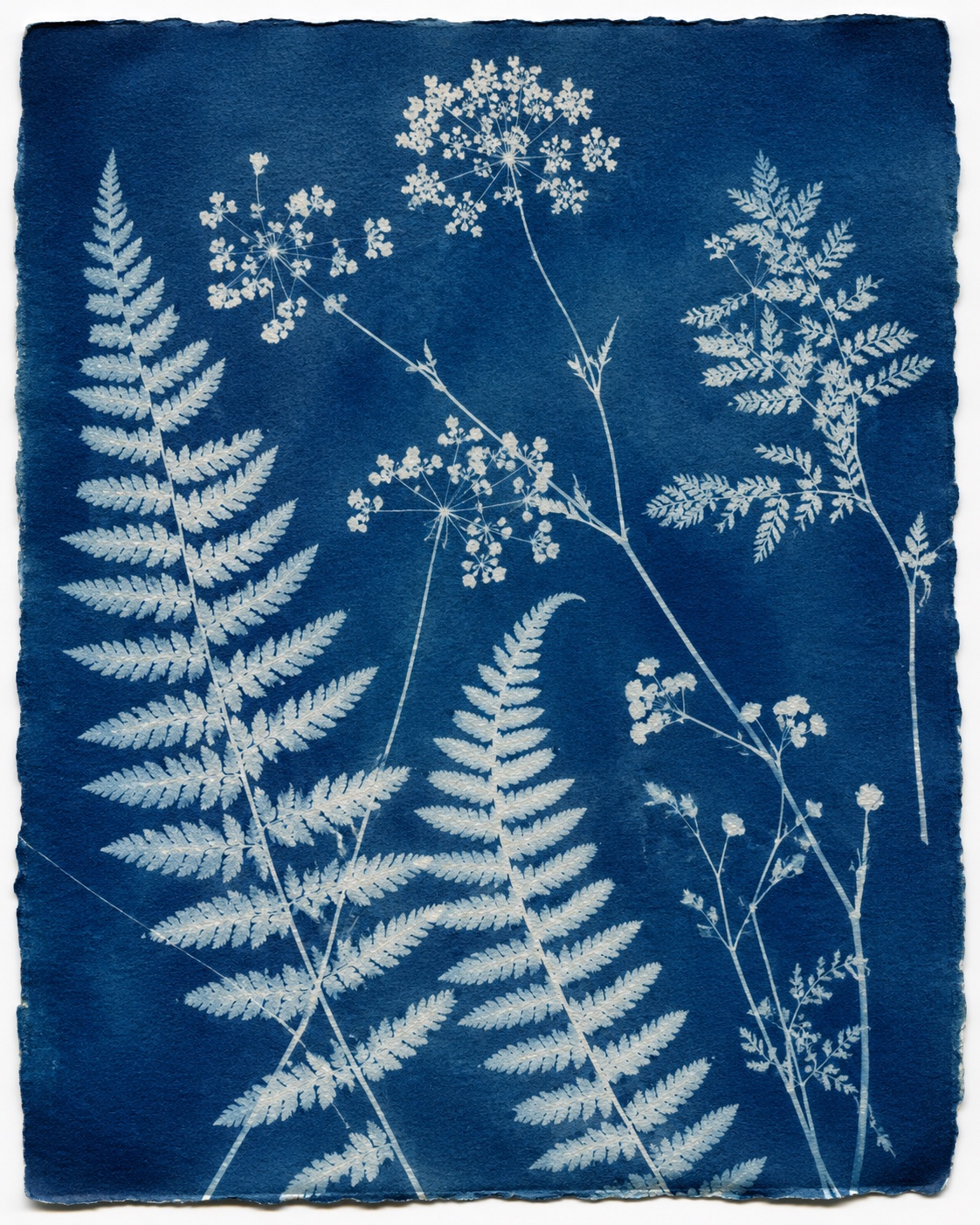
Unlike silver halide prints that require caustic development baths, stop baths, and acidic thiosulfate fixers, a cyanotype is fully developed and fixed with nothing more than ordinary running water. Immersing the exposed paper in water dissolves and flushes away the unexposed, water-soluble iron salts from the paper fibers, leaving behind pure white highlights.
As the insoluble Prussian Blue pigment oxidizes in ambient air over the subsequent 24 hours, the shadows deepen into a rich, luminous cerulean. Because Prussian Blue is completely immune to sulfur fumes and atmospheric pollutants that cause silver prints to yellow and fade over time, properly washed cyanotypes stored away from alkaline conditions can endure for centuries with zero loss of tonal brilliance.
Historical Aesthetics Preserved in RfCamera
RfCamera's Prussian Blue monochrome profile translates this 1842 optical legacy into the digital age. Rather than a simple blue color tint overlay, our rendering pipeline maps image luminance values across the specific spectrophotometric curve of iron ferrocyanide, lifting shadow values into deep indigo while holding delicate highlights in creamy paper white.
With simulated rag paper deckle edges and organic tonal gradation, RfCamera offers mobile creators a gateway to early Victorian photographic history directly from their modern smartphone.