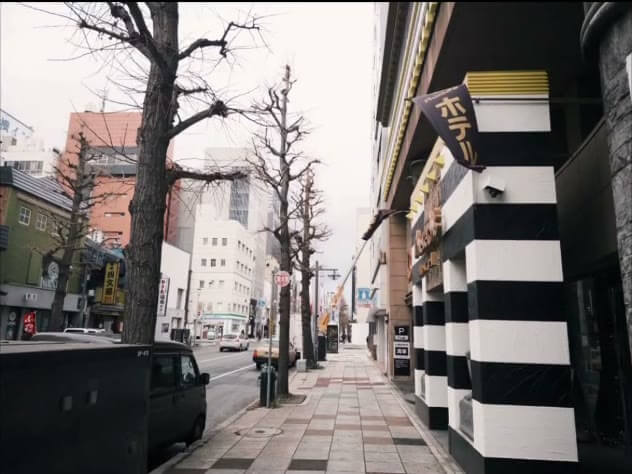
CineStill 800T owes its cinematic night aesthetic to a chemical anomaly created when motion picture stock is modified for standard still-camera development. By stripping the carbon remjet backing from Kodak Vision3 500T emulsion, bright highlights penetrate the film base and reflect back into the red-sensitive layer, producing characteristic crimson halation around practical lights. Recreating this look at night requires balancing 3200K tungsten color temperature against mixed urban illumination while metering precisely to prevent shadow grain from collapsing into murky digital noise.
The Chemistry of Remjet Removal and Red Halation Physics
Eastman Kodak engineered Vision3 500T (stock code 5219) for 35mm motion picture cinema cameras running at 24 frames per second. To prevent static discharge during high-speed transport through movie camera gates and to prevent light from bouncing off the camera's polished pressure plate, Kodak applied a black carbon backing called the remjet layer. Standard commercial photo labs process still film using the C-41 chemical process, which lacks the specialized alkaline pre-bath wash required to dissolve and scrub off the carbon remjet. If standard C-41 minilabs attempt to run cinema film with its remjet intact, the carbon particles slough off in the chemical tanks, contaminating the developer bath and ruining subsequent rolls of film.
Brothers Wright founded CineStill to solve this processing limitation by chemically stripping the remjet layer before spooling the film into standard 35mm cassettes. Removing this anti-halation layer fundamentally alters how the film emulsion handles intense highlight exposure. In standard color negative film, light passes through the blue, green, and red emulsion layers, and any residual photons are absorbed by the anti-halation layer or dyed film base. Without the carbon remjet backing on CineStill 800T, high-intensity light rays from neon glass tubes, halogen car headlights, and bare streetlamps punch completely through the triacetate base. These photons strike the camera's metal pressure plate, reflect backward at an angle, and strike the bottom layer of the emulsion a second time.
Because the bottom light-sensitive layer of color negative film is the red-sensitive silver halide layer, this secondary exposure registers as a distinct red-orange corona, or halation bloom, radiating outward from specular light sources. The effect is entirely optical and chemical, depending directly on the intensity gradient of the incident photons and the physical thickness of the film base. Halation behaves as a localized, threshold-activated optical phenomenon centered strictly on specular highlight boundaries, differing fundamentally from uniform soft-focus diffusion filters.
Tungsten Color Balance: Managing 3200K Kelvin in Urban Environments
Standard daylight film stocks are balanced for 5500K daylight, which matches natural midday sunlight. CineStill 800T is formulated for 3200K artificial tungsten illumination, the traditional standard for incandescent film studio lamps. When shot under natural daylight without a warming filter, 800T renders scenes with a pronounced, cool cyan-blue color cast. To correct daylight scenes, analog photographers screw an amber 85B filter onto their lens, which absorbs blue wavelengths but costs approximately two-thirds of a stop of light, reducing the effective film speed to roughly ISO 500.
Night street photography flips this chemical property into a creative advantage. Modern cities present a chaotic mix of color temperatures, ranging from 2200K high-pressure sodium streetlamps to 2700K incandescent shop windows, 4000K metal-halide floodlights, and 6500K LED street fixtures. Under 3200K tungsten calibration, warm interior incandescent lights and neon signage render in natural, clean cream and amber tones rather than muddy orange. Simultaneously, shadows, wet sidewalks, and deep night skies shift into rich indigo and teal tones.
This dual-tone chromatic contrast—warm, blooming subjects framed against cool atmospheric backgrounds—defines the visual vocabulary of classic neo-noir cinema. When composing night street shots, position your primary human subjects near warm artificial light sources so their skin tones remain balanced, while allowing ambient street shadows to recede into cool cinema-grade blues. If a scene contains exclusively high-kelvin modern LED illumination, dial in slight exposure compensation to prevent the cool blue tones from overwhelming midtone skin values.
Exposure Latitude, Push Processing, and EV Metering Strategy
Color negative film possesses broad overexposure latitude but punishes underexposure with heavy, desaturated grain. CineStill 800T can absorb two to three full stops of overexposure while maintaining highlight detail; specular highlights will bloom heavily with red halation, but the surrounding exposure will remain usable. Conversely, underexposing 800T by even a single stop leads to thin negatives where shadow values drop below the base fog level of the film base. In digital scans, underexposed shadows manifest as muddy green-brown patches filled with clumping chromatic noise rather than deep, clean blacks.
For street shooting at night, calibrate your handheld light meter or in-camera spot meter for Exposure Value (EV) levels between 4 and 6, typical of neon-lit storefronts and wet downtown streets. Avoid matrix or evaluative metering modes, which calculate an average exposure across the entire frame. Because a night scene contains vast expanses of deep black sky and shadow, an evaluative meter will attempt to lift those dark areas to middle gray (18% reflectance), drastically overexposing your shutter speed and blowing out neon signs into white, featureless flares.
Instead, meter directly off a midtone surface receiving ambient illumination—such as wet concrete, an asphalt road surface, or the illuminated clothing of a pedestrian. On a fast 35mm or 50mm prime lens set to f/1.4 or f/2.0, this yields workable hand-holdable shutter speeds between 1/30s and 1/60s. When shooting in dimly lit alleyways where EV falls below 3, push processing the film by one stop to EI 1600 in C-41 developer increases image contrast and edge acutance, compensating for low ambient light at the expense of slightly coarser grain structures.
Recreating the Optical Chain in RfCamera's Shaders and Pipeline
Digital filters frequently fail to recreate CineStill 800T because they apply a generic uniform red glow across all highlights, or simply tint the entire image blue. In RfCamera, the tungsten look is reconstructed through a multi-stage optical simulation pipeline shared between the live viewfinder and the offline bake isolate. In widgets/film_view.dart, the live camera preview runs through custom GLSL shaders (shaders/film.frag) that extract specular highlights based on a luminance threshold calibrated specifically for high-intensity point sources.
The shader pipeline calculates the bloom radius selectively within the red color channel. The algorithm simulates the physical light scatter caused by the missing remjet layer: light above the specular threshold bleeds outward along a non-linear falloff curve, shifting into a saturated crimson wavelength (approximately 650 nanometers) at the perimeter of the highlight while keeping the central core of the light source clean and white. Simultaneously, the color matrix shifts midtone values to match a 3200K tungsten Planckian locus, suppressing excess yellow-green sodium spikes while cooling background shadows toward teal.
When the shutter fires, core/bake.dart replays this exact calculation sequence inside a background Dart compute() isolate. The isolate blends authentic scanned 35mm grain plates from assets/film/, ensuring that the grain structure in the dark zones mirrors the clumping behavior of pushed high-speed silver halide crystals without consuming CPU cycles on the main interface thread. The resulting image retains accurate micro-contrast across shadow transitions while rendering glowing crimson coronas around neon signage.
Compositional Techniques: Reflections, Wet Asphalt, and Contrast Ratios
Capturing striking CineStill 800T imagery requires seeking out environments with pronounced lighting contrast ratios. The film stock excels when framed around high-contrast specular light sources, but those highlights require dark negative space to make the halation corona visually impactful. Rainy evenings and post-storm conditions provide ideal shooting environments: wet asphalt, puddles, and glass storefronts act as secondary reflective surfaces that bounce colored neon and brake lights across the lower third of your frame, filling empty shadows with directional color ribbons.
When framing neon signage, pay attention to the intensity of the lettering against the building facade. Position the camera so the brightest light source sits near the edges or third-intersections of your frame rather than dead center. This compositional placement allows the red halation halo to bleed into surrounding dark textures—such as brickwork, fire escapes, or rain-slicked umbrellas—highlighting architectural details that would otherwise disappear into total darkness.
Avoid shooting directly into unshielded modern LED street fixtures or bare high-intensity daylight-balanced headlights, which produce uncharacteristically harsh, cold halos that overwhelm the frame. Focus instead on incandescent marquee lights, vintage neon tubing, vintage diner signage, and red automotive taillights, where the spectral emission curves complement the red-sensitive emulsion chemistry and produce rich, cinematic night frames with balanced color separation.